
ASDevices at CIOAE 2026: From Measurement to Verification
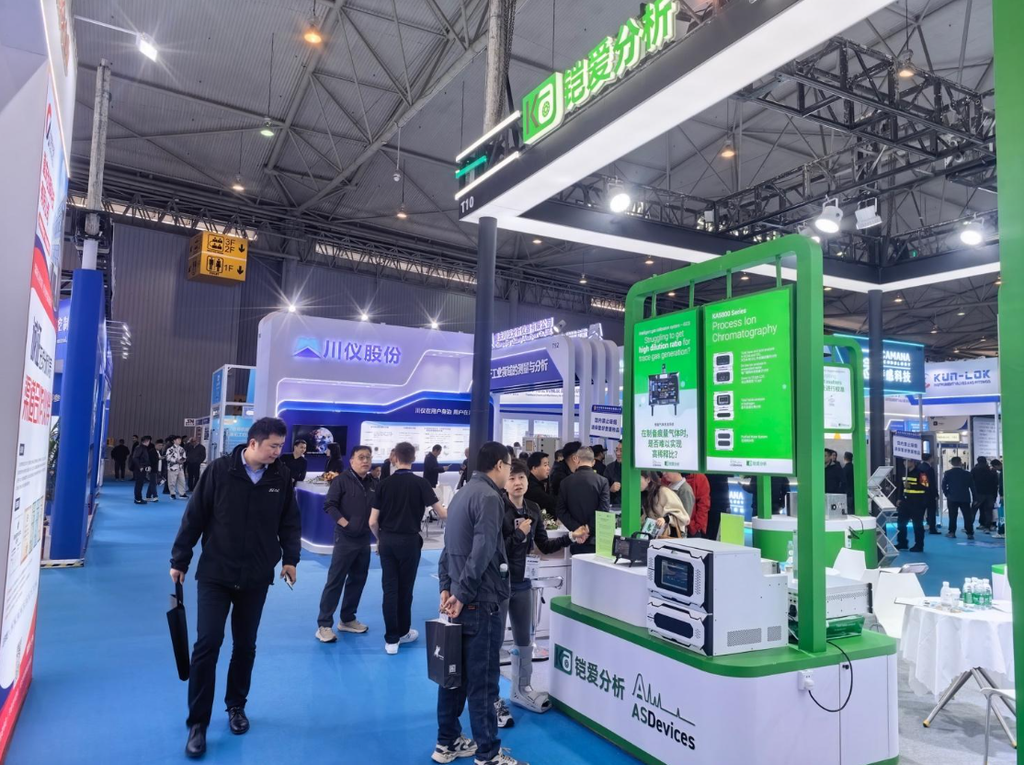
The 19th China International Forum and Exhibition on On-line Analytical Instrument Applications and Development (CIOAE 2026) took place November 11 to 13, 2026, at the Chengdu Century City New International Convention and Exhibition Center. At booth T10, ASDevices presented trace oxygen analysis, trace gas chromatography, on-line ion chromatography and dilution-based calibration, and talked with visitors working in semiconductor electronic gases, hydrogen, air separation and high-purity gases.
One question guided everything we showed: when impurity concentrations fall into the ppb and even ppt range, how do you make a result not only accurate and stable, but also verifiable? From individual components to complete analyzers, and in the technical sessions of the conference, our answers kept coming back to that question.
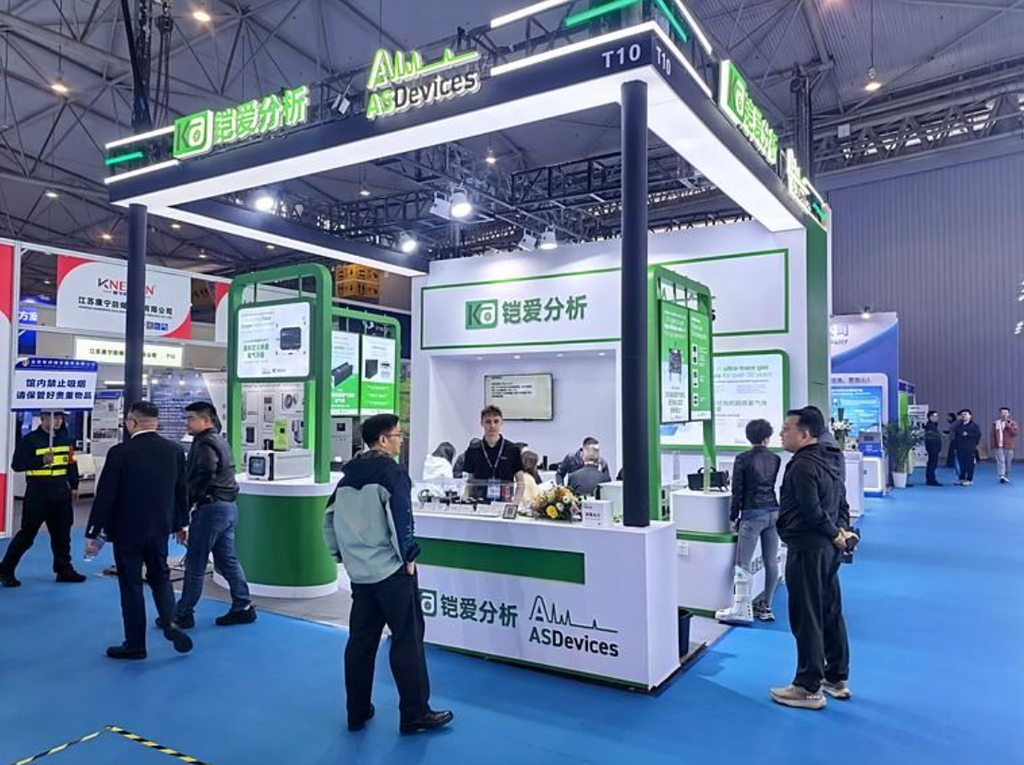
At the booth: from application problem to analyzer system
Visitors stopped by the product display area throughout the three days. Rather than walking through specifications, the team started with the gas, the sampling point and the maintenance routine: how the gas is purified upstream, how a low-level calibration is actually performed, and who keeps the analyzer running on site.
Trace analysis is sensitive to everything in the sample path. Sample lines, valves, fittings and background gas can all shift a reading. Displaying key components next to complete instruments made the link between sample integrity and analytical performance easier to see.
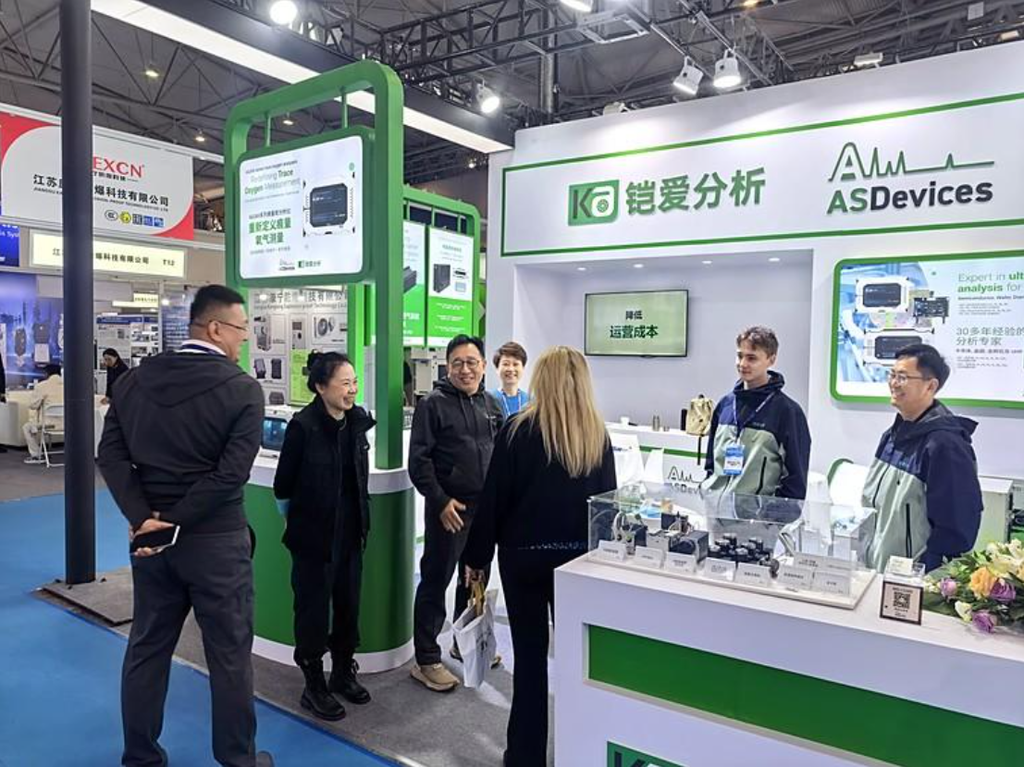
KA34X trace oxygen: low-level measurement with maintenance in mind
The KA34X series is built on non-depleting coulometric sensing, combined with a purge design and automatic electrolyte management. Together they address the three issues that dominate long-term trace oxygen measurement: ambient oxygen ingress, zero drift and disturbance from manual maintenance. For applications that need higher calibration confidence, an integrated dilution calibration option lets you check performance close to the actual measuring range.
Trace gas chromatography: complex matrices and multiple components
The KA6000Plus and KA8000Plus platforms serve electronic bulk gases, high-purity gases and hydrogen applications. They combine Epd detection, chromatographic separation and PLSV purged valve technology, and the analytical method can be configured around the sample matrix and the target impurities. Sensitivity is only part of the value. Reducing contamination and leak-induced interference is what keeps the system stable over months rather than hours.
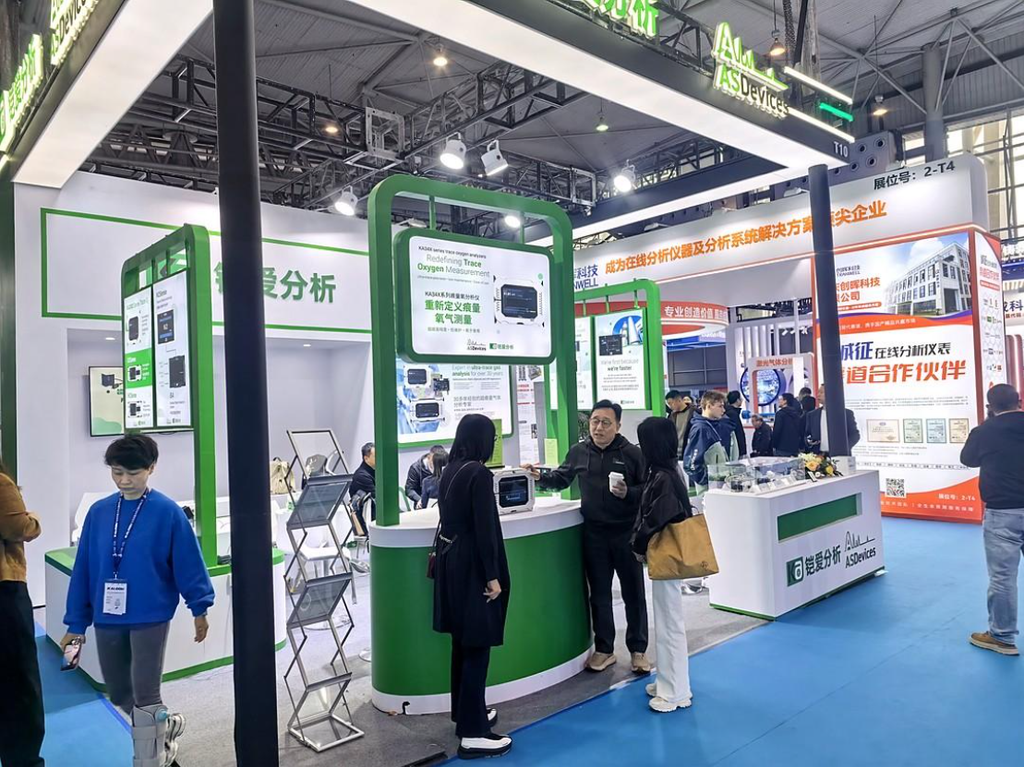
From detection to calibration: making low-level data defensible
KA5800 on-line ion chromatography: extending gas impurity analysis
For total acids and total bases in CO2 and clean dry air, and for total halides in hydrogen, the KA5800 series combines sample trapping with ion chromatography and automates the steps in between. With gas samples like these, separation performance is only one factor. Sampling, absorption and conversion, and calibration verification determine whether an instrument response can be traced back to an actual impurity concentration.
iGCS dilution calibration: verifying at the concentration you measure
An instrument that displays a ppb reading has not, by itself, demonstrated performance at that concentration. The iGCS uses critical-flow orifice dilution and its associated controls to prepare standard gas at the low concentrations needed for verification, whether for calibration, repeatability assessment or method validation. Combined with an on-site quality evaluation protocol, the entire chain from sampling and injection to detection can be checked as one system.
When specifying or accepting an analyzer, look at zero, method detection limit (MDL), repeatability and long-term stability together, and record the background gas, concentration and test conditions. Verifying performance at the concentration actually used in production is one of the most effective ways to reduce uncertainty in trace measurement.
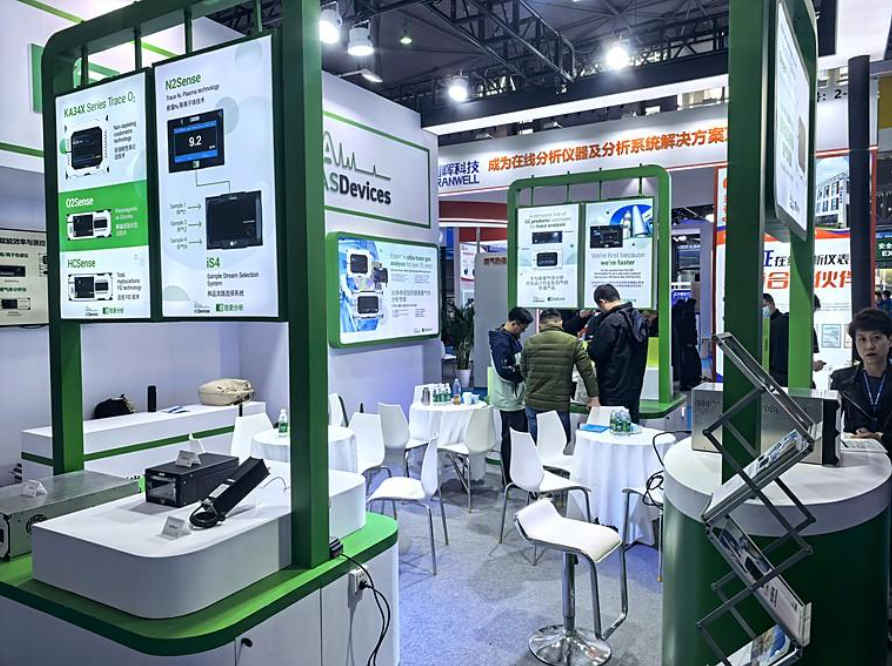
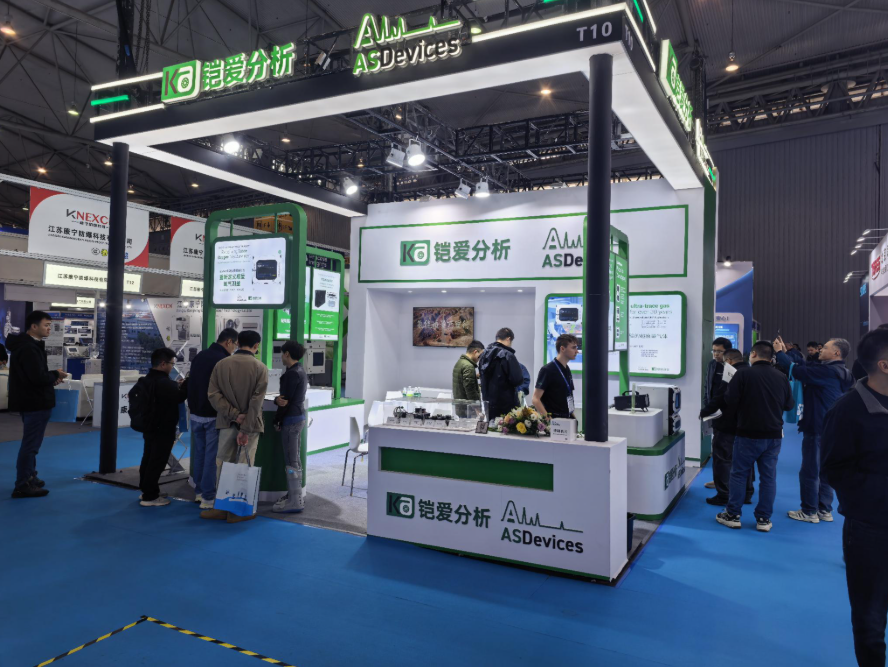
Instrument display area: trace oxygen and trace GC platforms (2 photos)
Hydrogen track: from analytical method to quality assurance
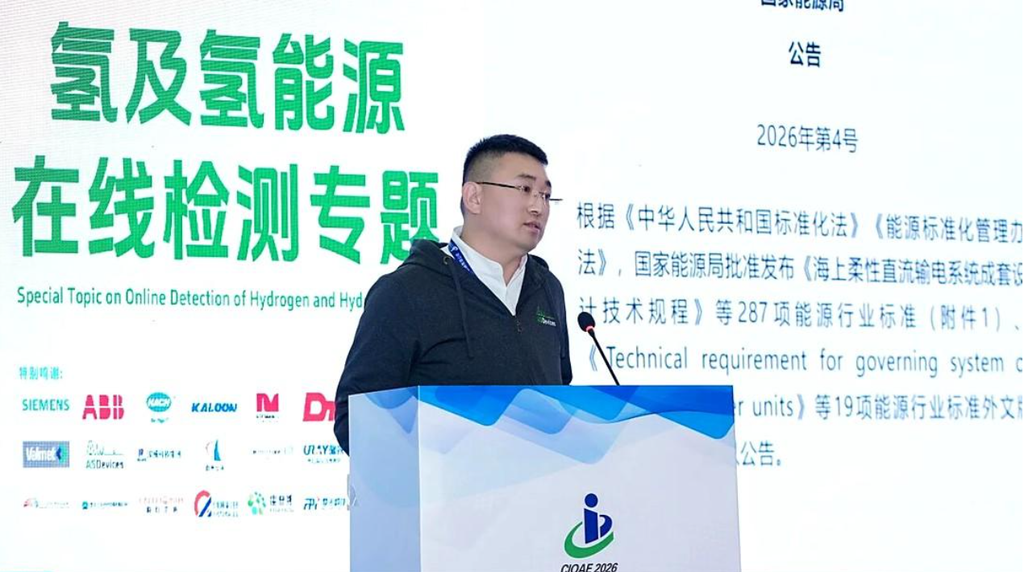
The conference included a dedicated track on on-line detection for hydrogen and hydrogen energy, bringing together fuel analysis technology, reference materials and testing services. Chen Chaoyang of ASDevices presented “Determination of Total Halides in Fuel Cell Hydrogen by High-Temperature Anoxic Hydrolysis and Ion Chromatography,” which addresses a specific method challenge in hydrogen quality testing.
Total halide analysis involves converting different species, trapping them and then quantifying them. Around the high-temperature anoxic hydrolysis and ion chromatography route, the discussion focused on how to connect sample preparation with detection, and how to evaluate the capability of the whole process through appropriate calibration and verification. This is also the direction we are taking: from single measurement techniques toward complete application workflows.
Media view: answering industry questions
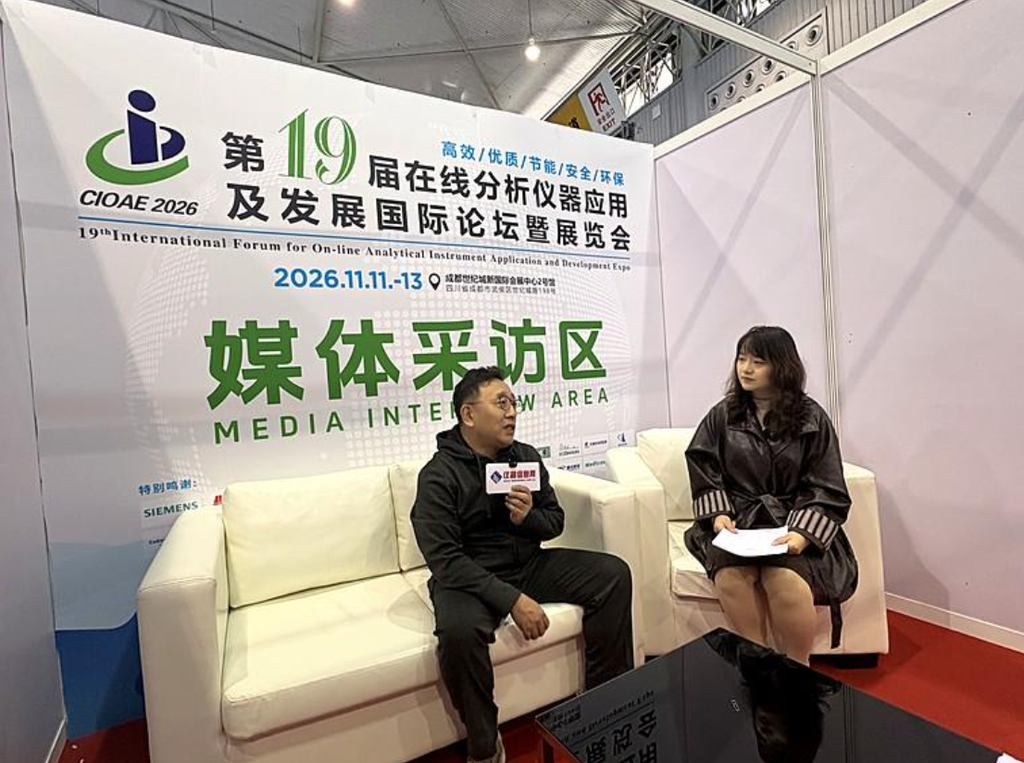
Instrument.com.cn interviewed Frank Zhu (Zhu Weiyu), Global Vice President of Sales at ASDevices, about industry opportunities, the Chinese market, localization and semiconductor applications. Our position is straightforward: the value of an instrument shows up in field data, and core technology only pays off when it is backed by application development, calibration verification and service.
For semiconductor and high-purity gas users, sensitivity is the starting point, not the finish line. Whether the sample is contaminated, whether a low-level result can be verified, whether maintenance is practical and whether service responds in time all determine what an instrument is really worth in use. Getting clear answers to those questions is what technical exchange is for.
After the show: bringing the discussion back to the site
Three days in Chengdu brought together product demonstrations, method discussions and application conversations. The booth conversations also gave us concrete starting points for sample testing, method adaptation and technical service after the show.
Drawing on application development and local service capability in Shanghai, ASDevices will continue to develop system solutions, from sample transport and analysis to low-concentration calibration and verification, for semiconductor electronic gases, hydrogen, air separation and high-purity gases. The goal is to turn specifications into measurement results that customers can repeat and verify on site.
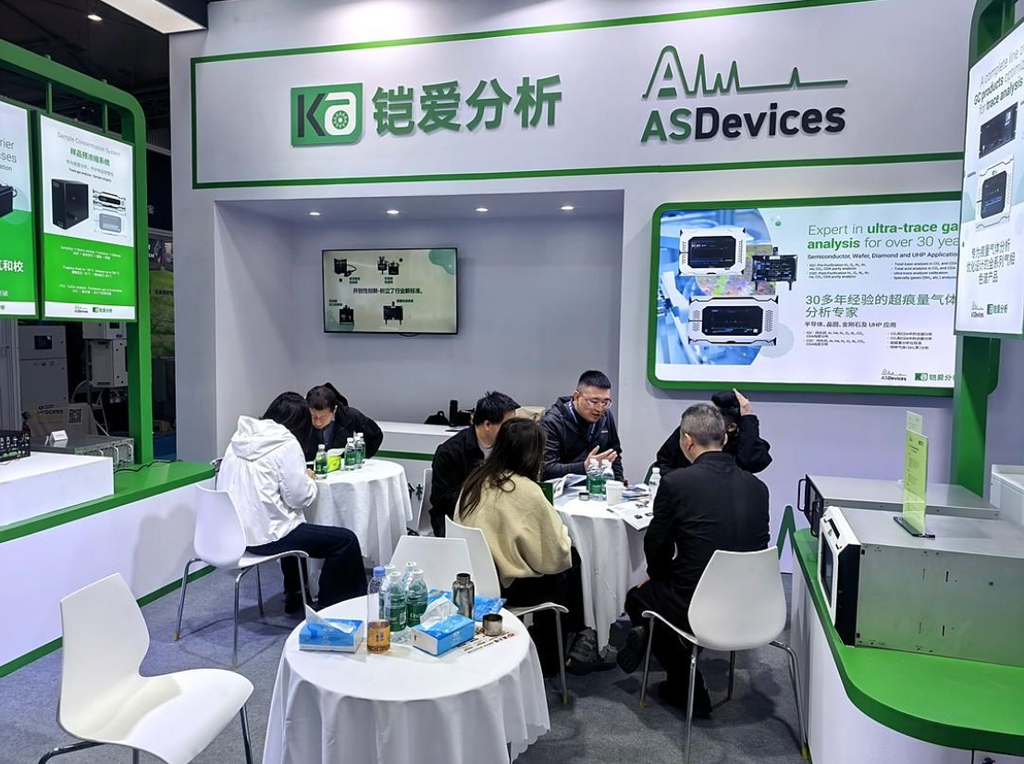
Thank you to everyone who visited booth T10. We welcome further discussion of your sample matrix, target impurities, concentration range and site conditions, so we can work out an analytical and verification approach that fits your real process.
